I used to review records
I'm better now.

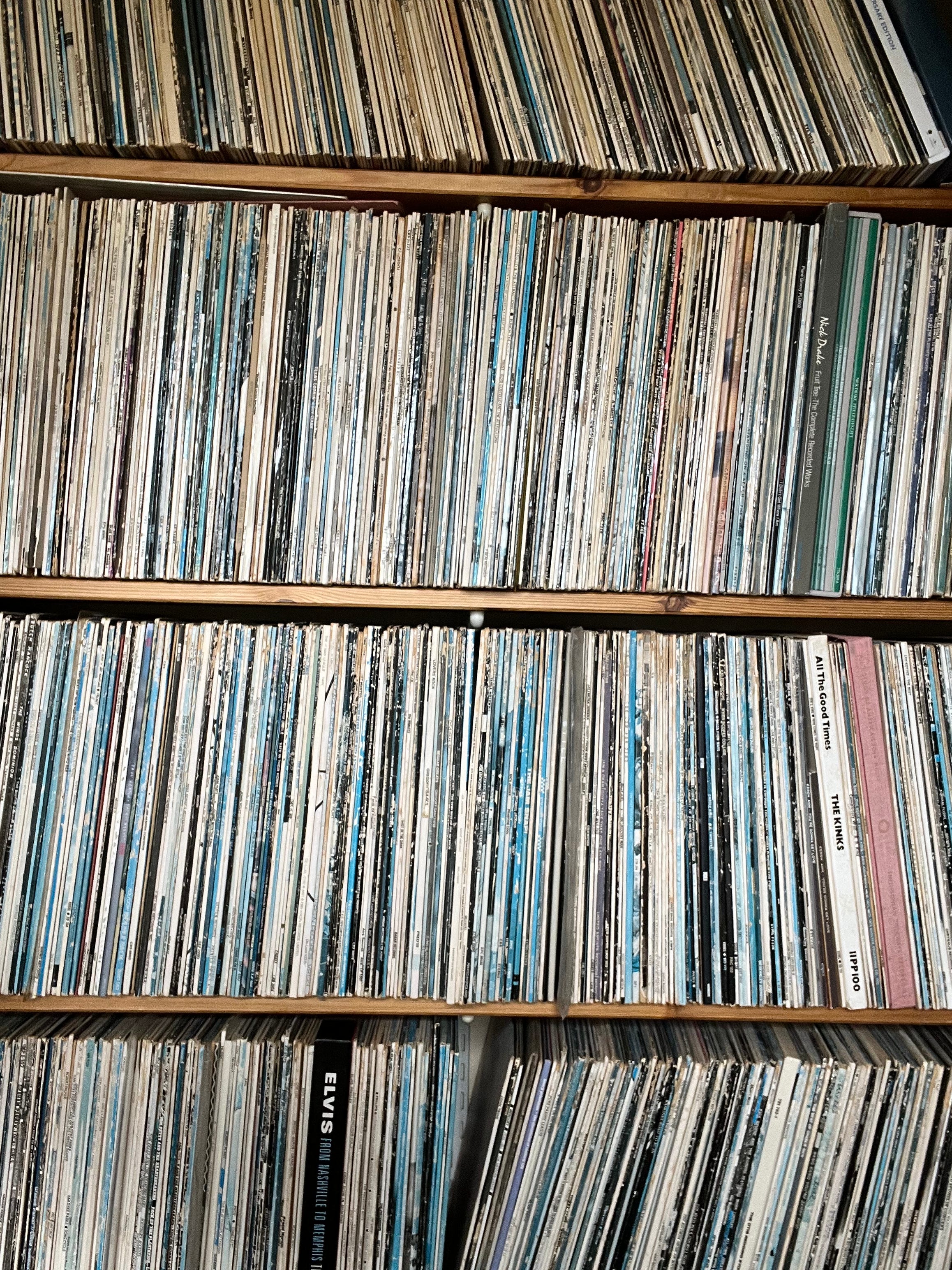
It was the introduction of Reels that turned me into a regular poster on Instagram. Reels are short videos which Instagram brought in to fight back against TikTok. Initially they were no more than ninety seconds long, which is what attracted me. Limitations are always strengths, particularly when it comes to any form of public speaking. I long ago discovered that the only difference between good public speakers and the rest is that the former have a highly developed sense of how long they’ve been speaking in public and the latter haven’t and don’t intend to find out.
It was with this knowledge that I set myself the task of standing in front of my records (after all a rack of records is more picturesque than a shelf of books because people can’t pick out individual titles) and recording me saying something about an album in the time provided and then posting the resulting Reel on Instagram. The choice of records was usually dictated by some anniversary – this record came out 48 years ago today etc – though that was just a spurious way of providing some kind of frame. The choice of words was driven by nothing much more than a desire to avoid “amazing”, “iconic” and the other adjectives without which most of those who talk between records on the radio would be entirely mute.
When I began posting these Reels my Instagram account had just over two thousand followers. It now has over ninety thousand. This certainly seems to prove what people always say about social media; it pays to be consistent. It may also bear out what Rory Sutherland says about McDonalds; customers come back not because they’re expecting a great meal but because they know that at least what’s being served won’t be terrible.
Some of those followers may be familiar with some of the other things I’ve done but I get the impression that most of them aren’t. A great deal are from overseas and not just from English-speaking countries. I look at the comments but generally not until some time later. I don’t respond because I figure I’ve already had my say and besides the internet is already groaning under the weight of people (mainly men of a certain age) thinking they’re having the last word.
Nonetheless it’s very gratifying when people say that they like the posts. It’s even better when they say that one of my Reels sent them off to listen to something featured. The ease with which you can do that nowadays is one of the benefits of streaming music which is insufficiently acknowledged.
It hasn’t earned me a penny and it takes more time and effort than you’d think. Nonetheless I’m grateful for what it’s given me, which is a renewal of my old belief that all records have a story behind them, that it’s always possible to hear something in them you’ve never heard before and, as the time you’ve lived with them increases, there’s always something they have to tell you about real life.
It’s sent me back to records I haven’t listened to for decades, induced me to spend time with records that I had filed away unheard back when James Callaghan was Prime Minister, helped me realise that a lot of the recorded music I once considered the staff of life no longer cuts it and encouraged me to put my feelings about some of these records into words. There’s no particular form for these words but they are the polar opposite of the reviews which were once demanded by the music press. For a start I tend not to say anything even mildly disparaging about them because there doesn’t seem much point.
I don’t miss reviewing records one little bit. Before I started doing it I couldn‘t imagine anything more exciting than being paid to sit in judgement on some new album. In those days once you showed that you could turn round the material efficiently you were asked to do it again and again and you were flattered to be asked. I did it for almost forty years. Now that world is gone I don’t miss it. In fact I am hugely relieved to no longer have to experience that queasy feeling which came of being expected to have strong feelings about something I didn’t much care about one way or the other. Faced with that kind of pressure, most reviewers find it easier to either take out their frustration on the record or praise it to the skies when in truth the record deserves neither. What I learned from 40 years of record reviewing is the most honest review is three stars, which means “OK if you like that kind of thing”, but this is the last thing a reviews editor wishes to hear.
Back then that whole circus depended on a bunch of people ready to play the record industry’s game by rushing to premature judgement in an atmosphere of barely-suppressed panic. I detect traces of it even now, every time there's a new album by Taylor Swift or Kendrick Lamar. I read reviews of records I will never hear and the thing I think most often is, you don't really mean that. Come back in forty years.
Reviews continue to be important precisely because so much music can be listened to almost instantly. When I was buying the NME, Sounds and Melody Maker every week the reviews (and, to a much lesser extent, the radio and the Whistle Test on TV) were the only ways of discovering new music. I got to know the writers who were likely to be in tune with my developing tastes.
Now we’re drowning in sound. We need a life belt and a good reviewer can be one. I review because I enjoy it, some people like it, and I might earn a new album or two. My opinion isn’t more valid than anyone else’s but it is based on 50 years of listening.
I once subscribed to The Word. The supplier was out of stock of the advertised free CD so I got a phone call from the record company, had a long conversation about music and he established what I might like. A few days later about six CDs arrived, all excellent. The music industry is a marketing machine but just sometimes there are enthusiasts who care about the music more than the industry. David Hepworth is one.
Record reviews used to be terribly important. Before the Internet, they were often your first point of contact with new or unfamiliar music. I was listening to ‘Future Days’ by Can this morning. I hadn’t heard a note of that band’s music when I bought that album. I read a review of it somewhere – I would imagine, during the mid-90s, in that 100 greatest albums of all time issue of MOJO, with the mock-up of the Sergeant Pepper album cover on the front.
I remember reading a writer’s early impressions of the R.E.M. album ‘New Adventures in Hi-Fi,’ months before its release, and hanging on every word. He seemed to hold a song titled ‘Binky the Doormat’ in particularly high regard, which speaks volumes about how much blind faith you should place in the opinions of music journalists.
Over time I got to know the writers whose tastes orientated with my own. I keep my CDs in those oblong wine boxes that my local supermarket throws out. Currently I am making lids for them all. That’s 283 lids in total, although I am unhappy with the earlier ones and will go back and do them again. If I had a wife, I think that she might step in and put an end to this nonsense. Over the course of my ‘lidding’ I often come across records that I bought on the strength of what was written about them in WORD. I have no complaints. I reserve my ire for the weekly music press whose Mos Eisley-esque cohort of music critics were more pre-disposed to award some subpar racket, that they had of course received free of charge, nine out of ten, before slouching off to The Good Mixer with the drummer from Gene.
Reviewing records in 2025, where if you have a good Internet connection you can hear practically anything you want, strikes me as the act of a dilettante; it might explain why, at half-past three in the afternoon, I am still wearing a dressing gown. In finding words to describe the new Divine Comedy album, all I am really doing is placing it in the context of the previous album and a few other points in the discography: This is where the artist is now; he’s toned down this element of his songwriting, thank God; this song was a surprise, a pleasant one; I don’t know what the bloody hell he was thinking here; If you’ve ever wondered what a Werthers Original might sound like when converted into music, Neil Hannon might have just provided a definitive answer with this song, etc.